Հայերեն
 Русский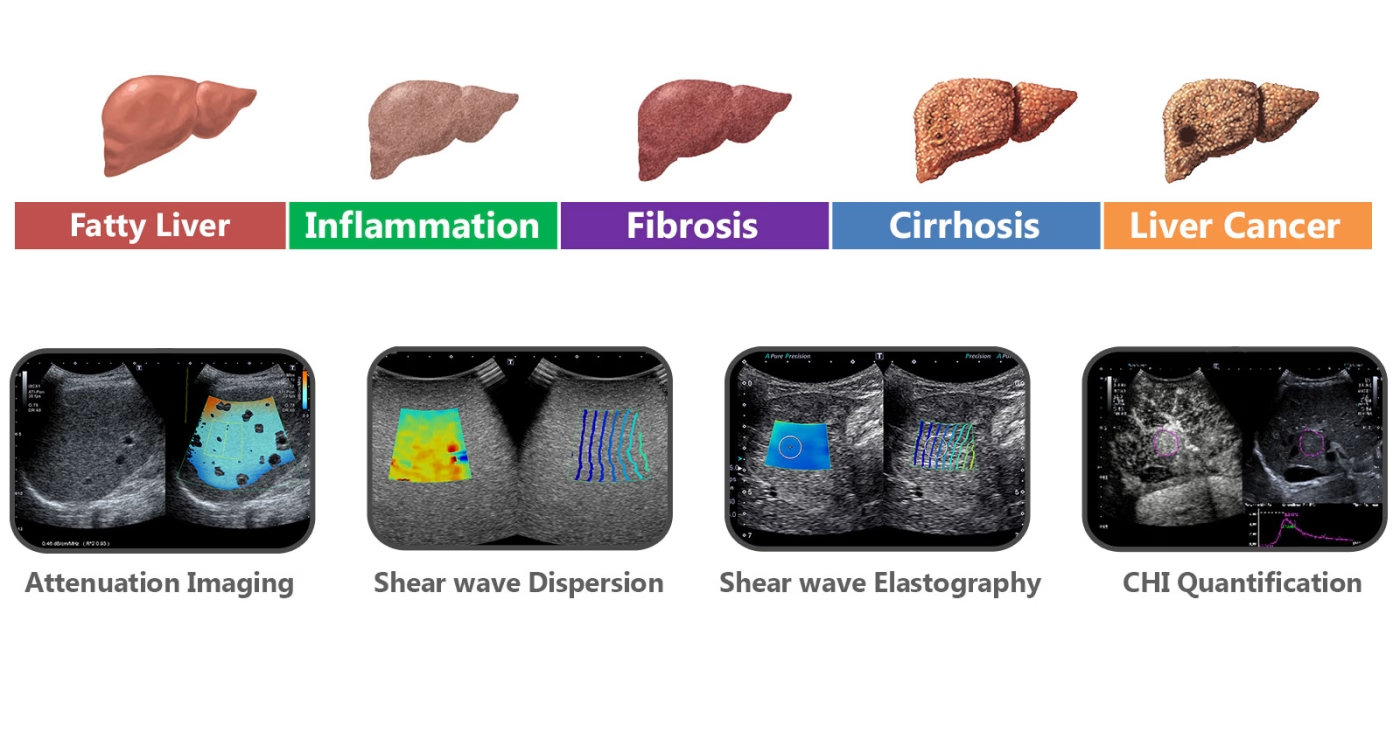
Liver Elastography (FibroScan): What It Is and Why It Is Performed
Liver elastography is a modern, non-invasive ultrasound-based diagnostic method that allows quantitative assessment of liver tissue stiffness.
This parameter is directly associated with the degree of liver fibrosis, a key process underlying the progression of most chronic liver diseases.
The method is widely used in clinical practice as an alternative or complement to liver biopsy, particularly for initial evaluation and longitudinal follow-up.
What Is Liver Fibrosis and Why It Matters
Fibrosis is the accumulation of connective tissue in the liver in response to chronic injury (metabolic, viral, alcohol-related, or autoimmune).
At early stages, fibrosis:
has no specific symptoms;
may occur with preserved well-being;
is potentially reversible if the underlying cause is eliminated.
At advanced stages, it may lead to:
liver cirrhosis;
portal hypertension;
liver failure;
hepatocellular carcinoma.
This is why early and accurate assessment of fibrosis is critically important.
How Elastography Works
Elastography is based on measuring the propagation of a shear ultrasound wave through liver tissue.
The stiffer and denser the tissue, the faster the wave propagates.
Results are expressed:
in kilopascals (kPa) or
in meters per second (m/s)
and correlate with fibrosis stages (F0–F4).
When Liver Elastography Is Indicated
Liver elastography is recommended for patients:
with metabolic dysfunction–associated steatotic liver disease (MASLD);
for dynamic monitoring during treatment or lifestyle modification.
Advantages of the Method
Liver elastography:
is non-invasive;
painless;
does not use ionizing radiation;
takes only a few minutes;
is suitable for repeated examinations;
allows assessment of fibrosis dynamics, not just its presence.
Compared to biopsy, the method:
is not associated with procedural risks;
reflects a larger volume of liver tissue rather than a single focal area.
Important Considerations for Interpretation
Elastography results must always be interpreted in a clinical context.
Liver stiffness measurements may be temporarily influenced by:
active inflammation;
cholestasis;
venous congestion;
food intake prior to the examination.
Therefore, elastography:
is not a standalone diagnostic tool;
should be assessed in conjunction with blood tests, ultrasound findings, and clinical data.
Is Preparation Required?
In most cases, the following is recommended:
fasting for 6–8 hours before the examination;
avoidance of intensive physical activity the day before.
Exact recommendations are determined individually.
Elastography and Biopsy: Competitors or Allies?
Elastography does not fully replace liver biopsy; however, in most clinical scenarios it allows:
avoidance of invasive procedures;
identification of patients who truly require biopsy;
reduction of unnecessary interventions.
Today, elastography is a tool for risk stratification and monitoring, not merely an “additional test”.
When to Consult a Physician for Liver Elastography
abnormal liver enzyme levels;
presence of liver steatosis;
existing risk factors for liver disease;
assessment of fibrosis progression or regression;
planning long-term patient management.
Clinical Perspective
Liver elastography allows detection of pathological changes before symptoms appear.
Intervention at this stage is when treatment is most effective.