

 Հայերեն
 Русский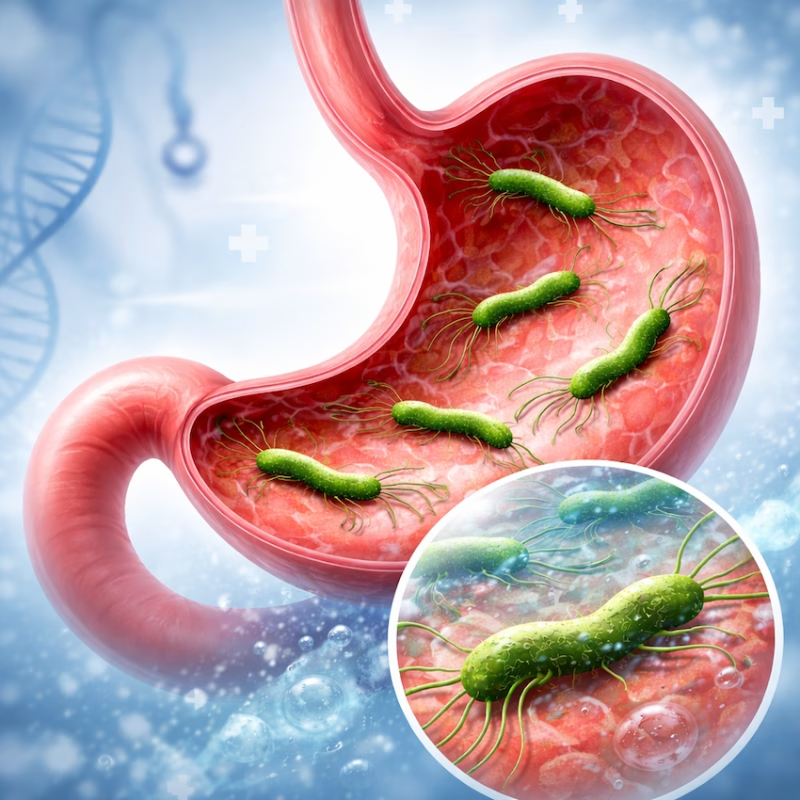
Helicobacter pylori (H. pylori)
is a spiral-shaped Gram-negative bacterium that colonizes the gastric mucosa.
The infection is one of the most common worldwide and plays a key role in the development of:
chronic gastritis,
peptic ulcer disease,
gastric MALT lymphoma,
gastric adenocarcinoma.
According to international consensus guidelines (Maastricht VI, ACG), H. pylori is considered an infectious disease that should be treated when confirmed.
Causes and Transmission
The infection is transmitted via:
fecal–oral route,
oral–oral route,
close household contact.
Infection most commonly occurs during childhood.
Risk factors
crowded living conditions,
low socioeconomic status,
infected family members.
Main Pathophysiological Mechanisms
H. pylori survives in the acidic gastric environment by producing urease, which breaks down urea into ammonia.
Key mechanisms of mucosal damage include:
chronic inflammation,
disruption of the protective mucous barrier,
altered acid secretion,
mucosal atrophy,
intestinal metaplasia with long-standing infection.
Chronic infection increases the risk of neoplastic transformation.
Symptoms
Most infected individuals are asymptomatic.
When present, symptoms may include:
epigastric pain or discomfort,
postprandial fullness,
nausea,
bloating,
heartburn,
recurrent ulcer-type pain.
Important: symptoms alone are not sufficient for diagnosis without proper testing.
Diagnosis (Modern Guidelines)
When to Test
Testing is recommended in:
dyspepsia in patients under 60 without alarm symptoms (“test and treat” strategy),
peptic ulcer disease,
MALT lymphoma,
atrophic gastritis,
long-term NSAID use,
family history of gastric cancer.
Diagnostic Methods
Non-invasive
¹³C / ¹⁴C urea breath test — most accurate non-invasive method.
H. pylori stool antigen test.
Serology (IgG) — not suitable for eradication confirmation.
Invasive (during EGD)
histology,
rapid urease test,
PCR,
culture (for resistance assessment).
Eradication Confirmation
Performed no earlier than 4 weeks after completion of therapy and at least 2 weeks after stopping PPIs.
Preferred methods:
urea breath test,
or stool antigen test.
Treatment (Maastricht VI, ACG)
H. pylori infection requires eradication therapy.
Regimen choice depends on:
regional clarithromycin resistance,
previous treatments,
allergies,
comorbidities.
Empirical triple therapy without considering resistance is not recommended.
Treatment Side Effects
nausea,
diarrhea,
metallic taste,
abdominal discomfort.
Adherence to therapy is critical for success.
Complications Without Treatment
peptic ulcer disease,
gastrointestinal bleeding,
atrophic gastritis,
gastric cancer,
MALT lymphoma.
Eradication reduces gastric cancer risk.
When to See a Doctor
persistent dyspepsia,
recurrent stomach pain,
peptic ulcer disease,
H. pylori infection in close relatives,
family history of gastric cancer,
need for long-term NSAID therapy.
Clinical Emphasis
H. pylori is an infection, not a “normal variant.”
Modern guidelines support the principle:
detect and treat, unless contraindicated.