COLONOSCOPY

Colonoscopy is an endoscopic examination of the large intestine (and the end of the small intestine, the ileum).

A colonoscope is a thin, flexible, long tube (endoscope) with a small light source and camera that is gently inserted through the anus into the large intestine and views the lumen of the large intestine from the inside. This allows even minor organic changes to be diagnosed: from superficial inflammation to widespread tumors.

A colonoscope is flexible enough to cope with the curves of the large intestine.

Why is a colonoscopy prescribed?

A colonoscopy is prescribed for both diagnostic and therapeutic purposes.

The most common indications for colonoscopy are:

  • Abdominal pain, diarrhea, severe chronic flatulence, rectal bleeding, prevention of colon cancer (especially in people with a hereditary predisposition), differential diagnosis of functional lesions of the gastrointestinal tract, etc.
  • Detection and removal of polyps that have grown from the mucous membrane of the colon,

Colonoscopy is indicated for people aged 45 and older regardless of the presence of complaints.

Colonoscopy with intravenous sedation (sleep, anesthesia).

  • In some cases, our staff may need to carry out additional cleaning procedures. Therefore, it is necessary to arrive at the center 30 minutes before the scheduled examination time.
  • One day before (or on the day of) the examination, you will be given a health questionnaire. It must be filled out and sent by e-mail. by mail or brought on the day of the examination so that the anesthesiologist can familiarize himself with your health history and current problems.
  • 3 hours before the anesthesia, you must not eat or drink anything. In the morning, you can only take regular medications, antihypertensive drugs, etc.
  • Plan your time so that after a colonoscopy under anesthesia, you are under the supervision of an anesthesiologist at the medical center for about 30 minutes.

It is not recommended to drive a car for 3 hours after anesthesia.

Cost of services

ONLINE BOOKING
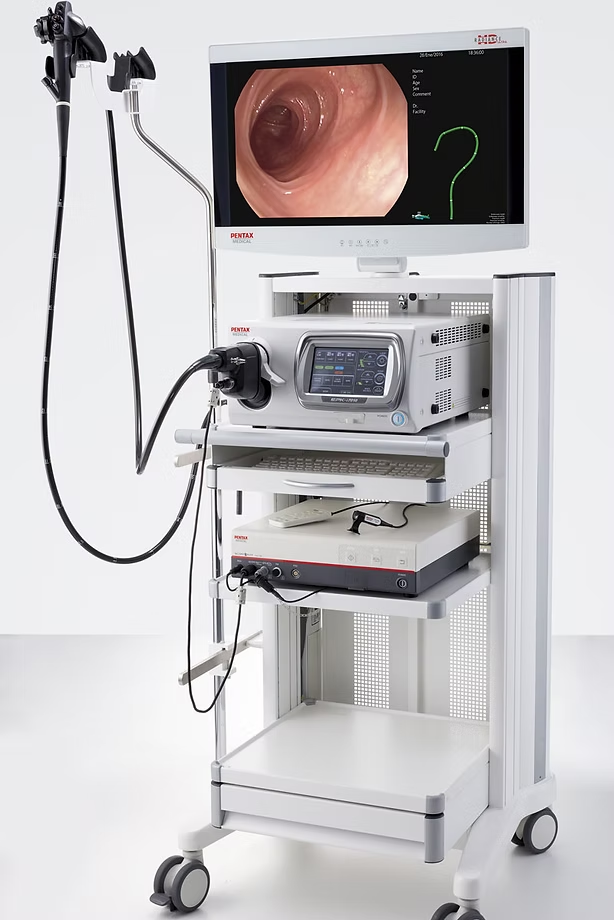
EPK-i7010

Why Choose Gastro Health Center

1. Equipment

All examinations are performed using the ultra-modern Japanese Pentax EPK-i7010 endoscopic system, providing 1080i HD+ image quality.
The OPTIVISTA Plus system with i-scan technology (SE, TE, OE) significantly enhances image contrast and allows for detailed visualization of the mucosal surface.

2. Specialists

Our specialists regularly undergo training on international platforms, participate in both theoretical and hands-on workshops, and are actively involved in Continuing Medical Education (CME) programs.

3. Quality Indicators

  • Examinations are performed strictly according to clinical indications

  • Procedures are carried out exclusively under intravenous sedation

  • Assessment of bowel preparation quality using the Boston Bowel Preparation Scale (BBPS), with each segment ≥ 2

  • Complete photo documentation of all anatomical segments

  • Confirmation of terminal ileum intubation with photographic documentation

  • Withdrawal time ≥ 7 minutes

  • Application of standardized classifications (Paris, NICE, JNET, Kudo — when indicated)

  • Polypectomy performed in accordance with international guidelines

  • Biopsy performed when indicated (IBD, suspected microscopic colitis, neoplasia)

  • Recording and analysis of the Adenoma Detection Rate (ADR), currently ≥ 45%

  • Confirmation of complete examination (Cecal Intubation Rate ≥ 95%)

  • Complication rate ≤ accepted international thresholds

Endoscopist Competency

  • Minimum requirement: ≥ 500 diagnostic colonoscopies

  • Maintenance of competency: CME ≥ 20 hours per year

RULES FOR PREPARING FOR COLONOSCOPY

Diet

  • 3 days before the examination, eat foods with a low fiber content: white bread, white rice, dairy products, any type of meat, eggs, butter. Sweets, coffee, tea, hot chocolate are also allowed.
  • Avoid whole grains, black rice, buckwheat, beans, lentils, peas, corn, vegetables, fruits, legumes, nuts, hazelnuts, almonds, etc., dried fruits, sunflower seeds, thick juices.
  • 1 day before the test, eat soups, broths, potatoes without skin, apple or grape juice, black coffee, tea. It is recommended to drink enough still water.
  • Avoid solid foods, milk, orange juice, colored and strained juices, jams.
  • On the day of the test, in the morning (3 hours before the test), you are allowed to drink only still water.

Bowel preparation
In our center, the drug for the intestines “MOVIPREP” is used according to the following instructions:

Buy the “Moviprep” in advance.

Option 1: Two-phase (evening, morning)

Food and liquids are allowed until 13:00. After 13:00, you are allowed to drink clear liquids.
Stop drinking liquids 3 hours before the test.

On the eve of the survey

On the day of the examination

Examination time

1-st liter of solution

2-nd liter of solution

09:00

18։00–19:00

05:00–06:00

10:00

18։00–19:00

05:00–06:00

11:00

18։00–19:00

06:00–07:00

12:00

18։00–19:00

07:00–08:00

13:00

19:00–20:00

08:00–09:00

14:00

19:00–20:00

09:00–10:00

Option 2: One stage (morning)
Food and liquids are allowed until 15:00.
After 15:00, clear liquids are allowed.
Stop drinking liquids 3 hours before the test.

On the day of the examination

Examination time

1-st liter of solution

2-nd liter of solution

14:00

07:00–08:00

10:00–11:00

15:00

08:00–09:00

11:00–12:00

16:00

09:00–10:00

12:00–13:00

17:00

10:00–11:00

13:00–14:00

18:00

11:00–12:00

14:00–15:00

19:00

12:00–13:00

15:00–16:00

Taking the first liter of solution:
Dissolve one package of Moviprep A and B in 1 liter of still water until completely dissolved.
Increase the amount of solution to 1 liter and mix well.
Drink 250 ml of the solution every 15 minutes.
Over the next hour, drink another liter of permitted liquid.
Taking the second liter of solution:

Repeat the above scheme with the remaining packages of A and B.